
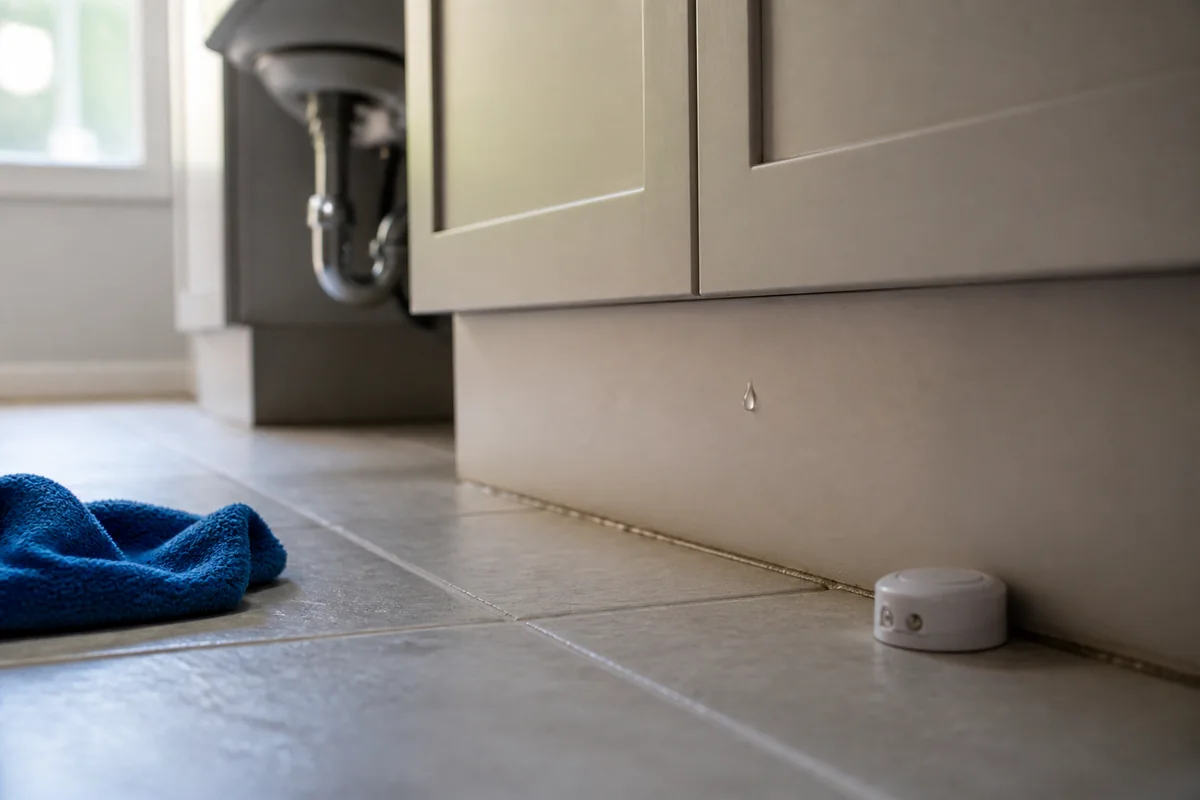
Many household leaks begin with a small change rather than a dramatic flood. Early awareness is about comparing today’s condition with what is normal for your home—not guessing at a hidden diagnosis.
Visual signs worth recording
New staining, peeling paint, swollen trim, soft cabinet panels, mineral deposits, or persistent moisture can all justify attention. Check accessible areas around toilets, beneath sinks, near appliance supply connections, and around the water heater without touching hot, corroded, or electrical components.
A single mark may come from an old spill or condensation. Date a photo and check whether it grows, darkens, or returns. That record is more useful than an uncertain description from memory.
Sounds and smells that are not part of the normal pattern
Running-water sounds when fixtures are off, repeated toilet refilling, or unexplained dripping can point to water movement. Persistent earthy or musty odors may accompany unwanted moisture, but odor alone does not reveal the source. Avoid opening walls or enclosed cavities to investigate.
Use the water meter as a question, not a verdict
EPA WaterSense recommends checking for leaks and reviewing water use. If every water-using fixture and appliance can be safely turned off, a changing meter reading may justify professional investigation. Some homes have irrigation, treatment equipment, or automatic appliances that use water unexpectedly, so understand the system before drawing a conclusion.
Useful note: write down the starting time, meter reading, appliances that were off, and any equipment that may cycle automatically. Do not enter a flooded, restricted, or unsafe utility area to reach a meter.
What to do with a small, accessible drip
If it is safe, place a stable container or absorbent material below the drip to limit spread, keep people away from a slippery floor, and photograph the source without manipulating it. Know where the main water shutoff is before the situation becomes urgent.
When to treat it as urgent
Move away and seek qualified help when water is near electricity, the flow is uncontrolled, sewage is present, a ceiling is bulging, the source involves a water heater or fire-suppression system, or the shutoff is inaccessible or will not operate normally. If you safely know the correct water or electrical control, follow the home’s documented emergency plan; otherwise do not improvise.