
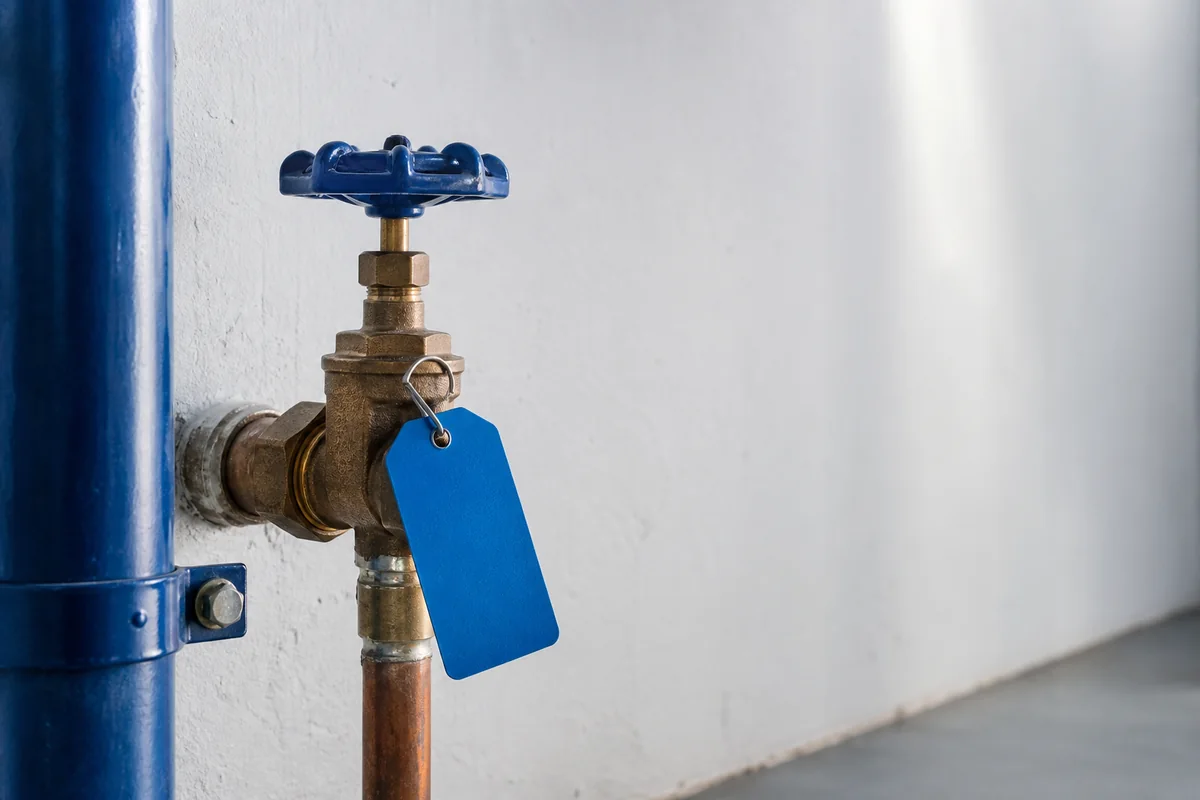
The best time to learn about the main water shutoff is before water is spreading. The goal is to identify the correct control, keep access clear, and make a household plan—not to force or test a valve you do not understand.
Start with reliable records
Review closing documents, inspection notes, utility information, building plans, or a previous plumber’s service record. In a rental or shared building, ask the property manager which controls belong to the unit and which require building staff. Never assume the nearest valve controls the whole home.
Common places to look
Depending on climate and construction, a main shutoff may be near the point where the service line enters the building, in a basement or crawlspace, in a utility room, garage, exterior wall box, or underground meter enclosure. Access rules differ by utility and jurisdiction. Do not open sealed utility equipment or enter an unsafe space.
Confirm identity before labeling
A qualified plumber, building manager, inspector, or water utility can help confirm which valve is the main control. Once confirmed, use a simple durable tag that says what the valve controls. Keep the label visible and avoid paint, adhesive, or wire placement that interferes with operation.
Do not force it: a valve that is corroded, leaking, unusually stiff, or unfamiliar should be assessed by a qualified professional. A failed valve can turn preparation into an active leak.
Make the access route part of the plan
- Keep boxes and storage away from the route.
- Make sure adults know where the control is and who to call.
- Store a photo and short location description with household emergency notes.
- Include any building, utility, or landlord contact requirements.
Water and electricity require separate judgment
A water shutoff does not remove electrical, gas, scald, or contamination hazards. If water is near electrical equipment, do not stand in water or touch wet controls. Contact emergency services, the utility, or qualified trades as appropriate.
Questions for a professional visit
Ask what the valve controls, whether it is in serviceable condition, whether a secondary fixture or appliance shutoff exists, and what the safe household procedure should be. Record the answer rather than relying on memory during an emergency.