
Seasonal plumbing checks should reflect the building, climate, and local requirements. Use this list as an observation prompt, then defer to manufacturer instructions, your utility, and qualified local professionals.
Spring: look for winter’s aftereffects
As temperatures stabilize, inspect accessible interior and exterior areas for new moisture, staining, or changed water flow. Check exterior faucets visually before reconnecting hoses. Review sump or drainage equipment using its manufacturer instructions and arrange service if it did not operate normally.
Summer: pay attention to outdoor use
Irrigation, pools, gardens, guests, and travel can change household water patterns. Look for unexplained wet areas, damaged hose connections, and fixtures that continue to run. If the home will be vacant, decide who can respond to an alert and how they can access verified shutoff information.
Fall: prepare before freezing conditions
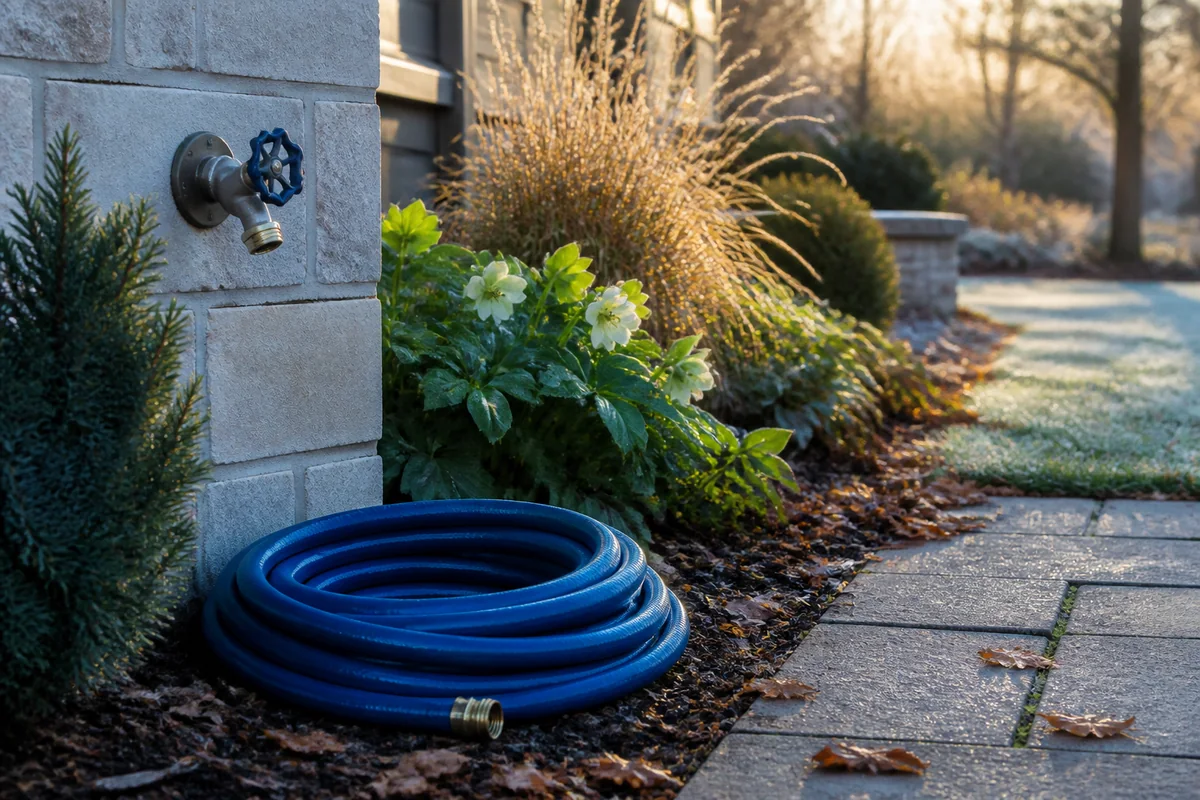
Disconnect outdoor hoses and follow locally appropriate winterization guidance for exterior fixtures and seasonal systems. Insulate or alter piping only with suitable materials and an understanding of the system. A qualified professional can identify vulnerable runs and code-compliant protections.
Frozen-pipe boundary: never use an open flame, torch, or improvised high-heat device on a pipe. If a pipe is frozen, split, inaccessible, or near electricity, shut off water only if it is safe and contact qualified help.
Winter: keep observation routes accessible
Do not block utility rooms, shutoffs, or service access with seasonal storage. Watch for unusually cold areas, reduced flow, or unexplained moisture. Follow safe heating guidance and never use unapproved heat sources in enclosed spaces.
Every season: update the same short record
- Date and photograph visible changes.
- Review water bills or usage alerts for unusual patterns.
- Confirm the main shutoff remains labeled and reachable.
- Record service and manufacturer-maintenance dates.
- Check that household contacts and access plans are current.