
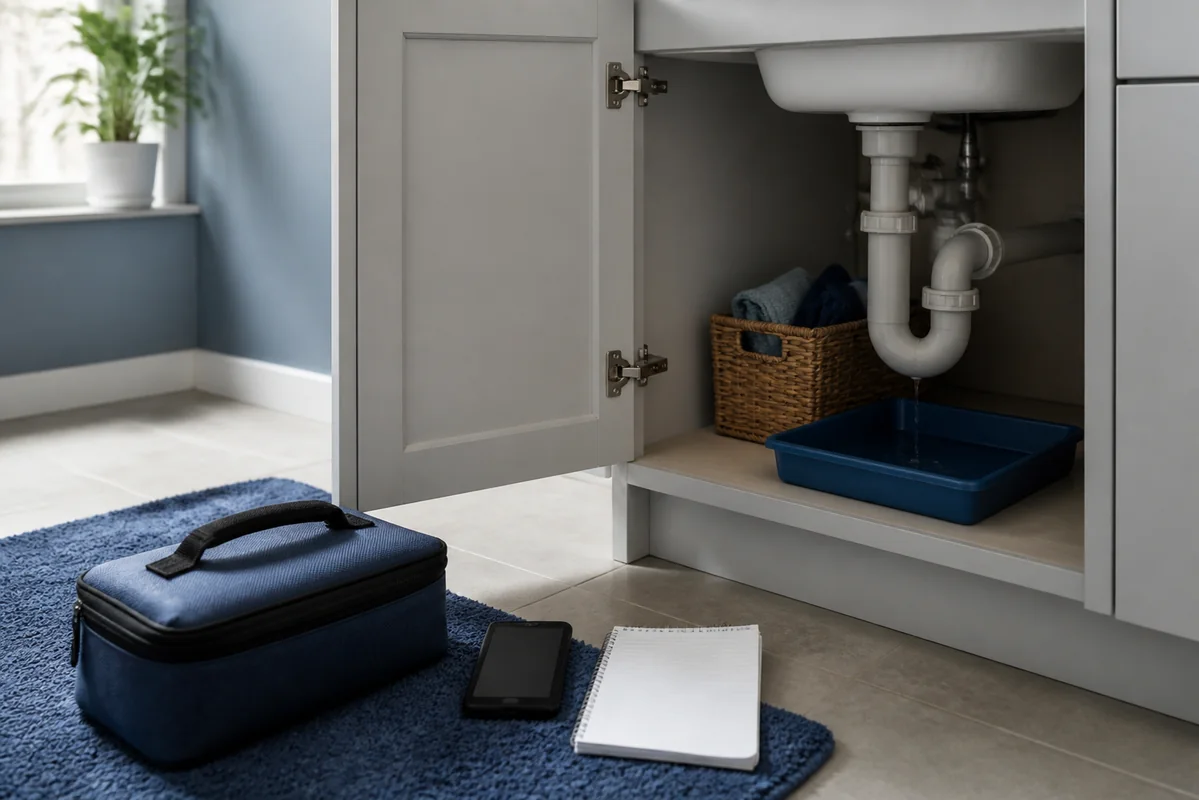
The most valuable DIY skill is recognizing when the safe next step is to pause. Plumbing problems can involve pressurized water, hot surfaces, electricity, gas, contamination, structural damage, and work governed by permits or local code.
Stop when water and electricity may meet
Do not enter standing water or touch wet electrical equipment, outlets, panels, appliance connections, or switches. A water shutoff does not automatically remove electrical danger. Move away and contact emergency services, the utility, or qualified electrical and plumbing professionals as appropriate.
Stop at fuel, combustion, or venting
Gas odor, soot, unusual combustion, damaged venting, or alarms require the equipment manufacturer’s emergency guidance and qualified help. Do not relight, disassemble, or modify fuel-burning equipment as an experiment.
Stop at sewage or unknown contamination
Wastewater can expose people to harmful microorganisms and chemicals. Keep children and pets away, avoid spreading contamination through the home, and arrange qualified cleanup and repair. Tell responders about any drain or cleaning products that may be present.
Stop when the system is hidden or moving
A pipe behind a wall, a fixture that shifts, a corroded valve, a bulging ceiling, or repeated leakage suggests that the visible symptom may not be the whole problem. Opening finishes can affect structure, fire barriers, waterproofing, and concealed utilities.
A useful pause question: if this step fails, can I safely contain the result with the shutoffs, tools, experience, and protective equipment already available? If the answer is unclear, do not begin.
Stop at permits, shared systems, and warranties
Water heaters, gas piping, main service lines, backflow devices, fire-suppression connections, shared-building plumbing, and some fixture changes may require permits, licensed work, inspection, or authorization. Property managers, utilities, insurers, and manufacturers may also have requirements.
What to do instead of pushing forward
- Contain a minor drip only when it is safe and accessible.
- Photograph the condition without disturbing it.
- Record when it began and what fixtures are affected.
- List any products or previous work involved.
- Contact a qualified professional and describe the safety concerns first.