
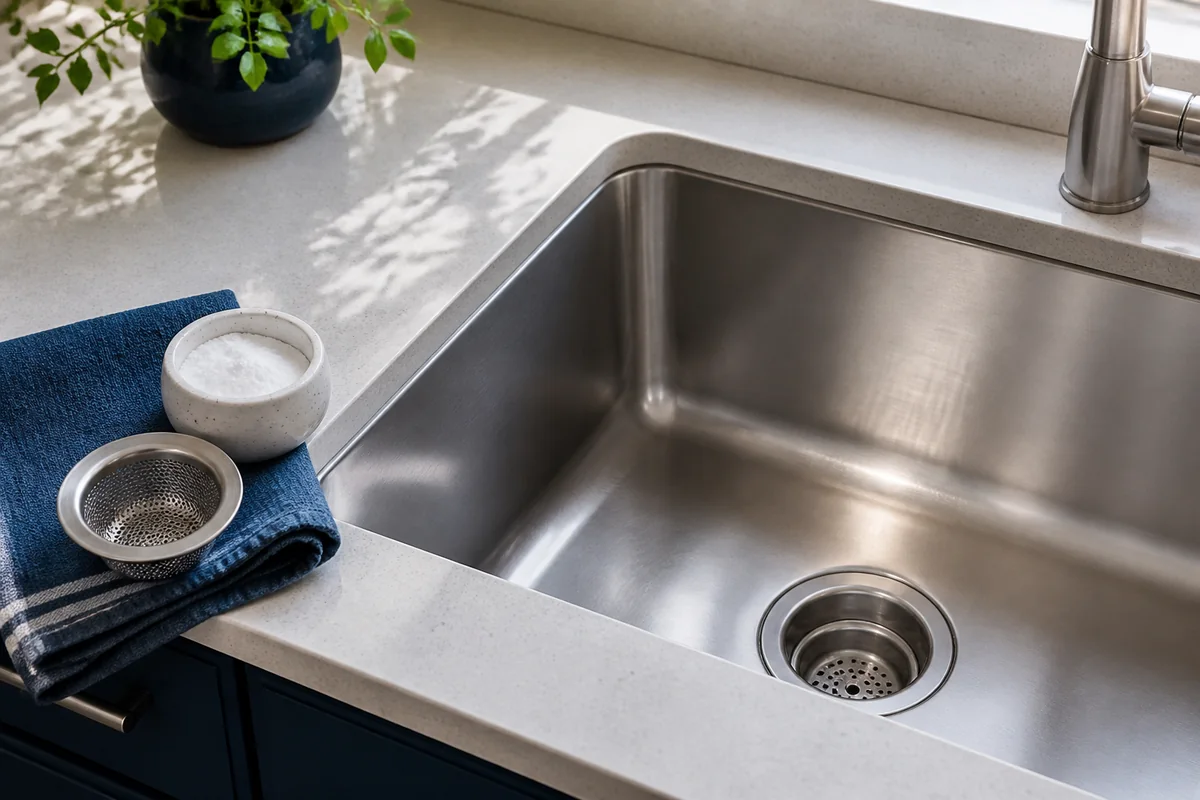
Good drain care is mostly about keeping unsuitable material out and responding early when flow changes. It is not about mixing household chemicals or forcing tools into plumbing you cannot see.
Use simple capture habits
Kitchen strainers can catch food particles before they enter the drain. Bathroom screens can reduce hair buildup. Empty captured material into the trash rather than pushing it through. Keep fats, oils, grease, coffee grounds, wipes, hygiene products, and other solids out of household drains even when packaging suggests they are flushable.
Notice the pattern of slow drainage
One slow fixture may point to a nearby restriction, while several fixtures changing together may indicate a broader system issue. Gurgling, recurring odors, backup at a lower fixture, or sewage should move the response away from household experimentation and toward qualified assessment.
Never mix drain products. CDC/ATSDR guidance notes that mixing cleaners can create dangerous gases. Do not combine bleach, acids, ammonia, commercial drain openers, or unknown residues. Keep people and pets away, ventilate only when safe, and follow poison-control or emergency guidance after an exposure.
What about hot water, baking soda, or a plunger?
Material and fixture instructions matter. Very hot water can damage some piping or create a scald risk, and home mixtures are not a substitute for diagnosing a recurring blockage. A simple plunger may be appropriate for some fixtures when no chemical product is present, but stop if the fixture is cracked, connections move, sewage is involved, or you are uncertain about the system.
Protect the trap and visible connections
Do not dismantle a trap simply because it is visible. A disturbed connection can leak, and the contents may be contaminated or contain chemical residue. If an item is valuable or hazardous, explain the situation to a qualified plumber before anyone opens the system.
When to call rather than repeat
Recurring slow flow, multiple affected fixtures, sewage odor, backup, leaks below a sink, or any problem following chemical use deserves professional attention. Tell the professional what went down the drain, what products were used, and when the symptoms began.