
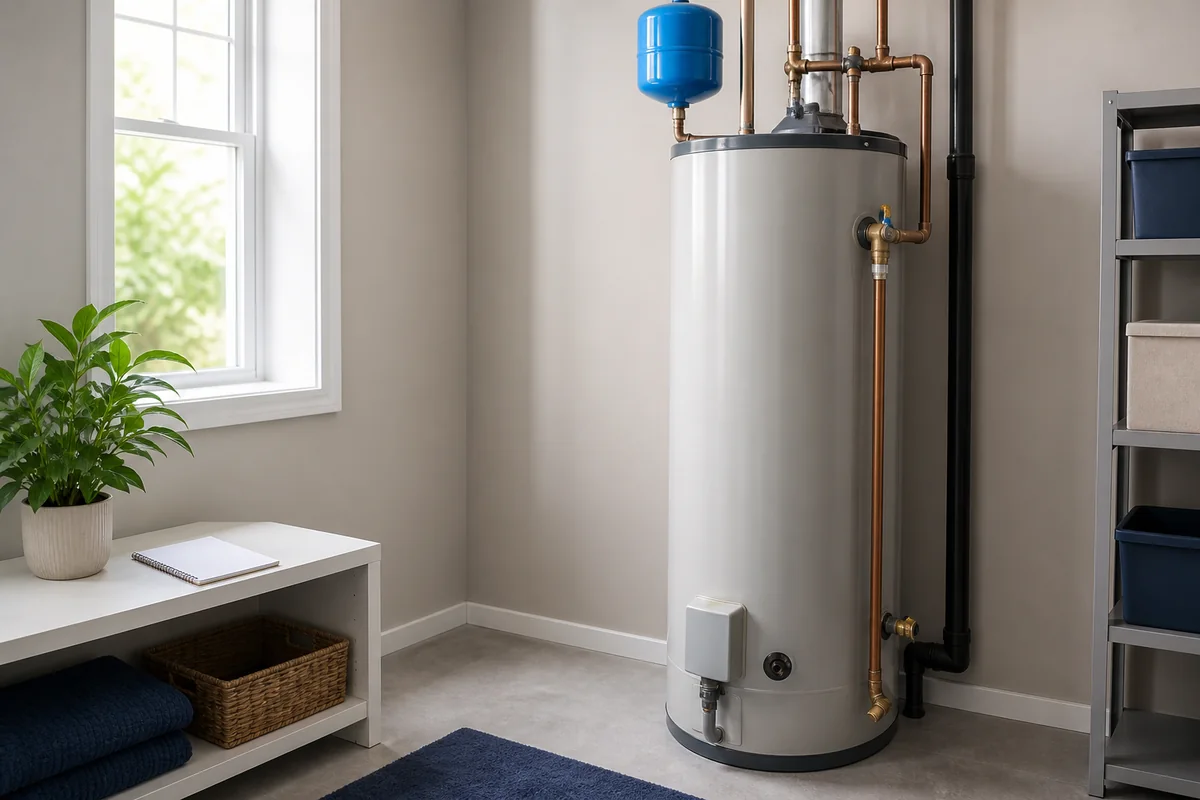
Water-heater decisions involve fuel or electricity, hot water, ventilation, pressure, sizing, efficiency, and local code. A useful household role is to gather information from a safe distance and bring better questions to qualified professionals.
Keep the boundary clear: do not remove access panels, alter temperature controls, operate relief valves, relight burners, change wiring, or disconnect fuel, venting, or water connections unless you are trained and authorized to do that work.
Record what you already have
From a safe, dry position, photograph accessible manufacturer labels rather than transcribing them from memory. Note whether the system appears to be a storage tank, tankless unit, heat-pump water heater, or another type. Record the approximate installation or service date if reliable documentation exists.
Describe the symptom precisely
- Is the water cold, merely cooler than usual, or intermittently hot?
- Does the change affect one fixture or the whole home?
- When did it begin, and is there an error code visible without opening the unit?
- Is there moisture, unusual sound, odor, discoloration, or a change in recovery time?
Do not troubleshoot a fuel odor, combustion concern, electrical fault, active leak, or very hot water through trial and error. Move away and contact appropriate emergency, utility, or qualified service help.
Ask about household use, not just tank size
DOE guidance explains that water-heater selection should consider fuel type, availability, energy efficiency, size, and cost. Discuss the number and timing of occupants, simultaneous hot-water uses, space constraints, climate, electrical capacity, venting, and the home’s future needs. A professional should calculate and verify requirements.
Discuss scald risk and temperature management
CPSC warns that very hot water can cause severe burns quickly. Ask how the system, fixtures, and any mixing controls should be configured for the household, especially where children, older adults, or people with reduced sensation are present. Do not change a setting you do not understand.
Compare proposals on the same questions
Ask what is included, which permits or inspections may apply, how the unit will be safely drained and removed, what maintenance the manufacturer requires, how warranties work, and who is responsible for electrical, gas, venting, or structural changes.